

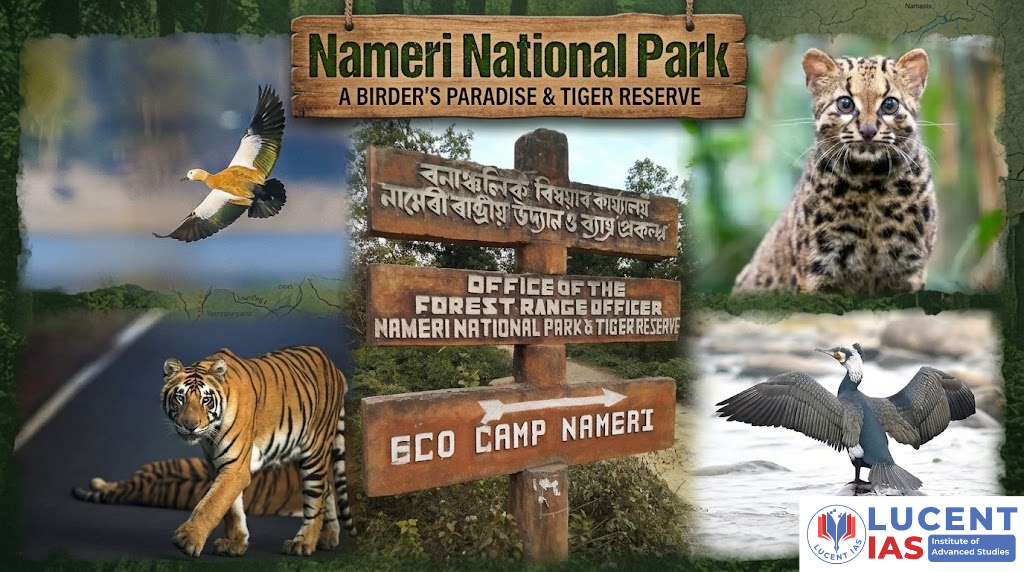
Discover Nameri National Park: Assam’s premier tiger reserve and birding paradise. Explore its unique guided wildlife trekking, rare wild cats, and vibrant river ecosystems. Important for APSC Prelims & Mains.
Introduction
Nameri National Park is a prominent protected area situated in the Sub-Himalayan foothills of Northeast India. Characterized by its rugged terrain, dynamic river networks, and vast elephant herds, it holds the distinction of being the only national park in Assam that permits guided wildlife trekking within its core zones.
Administrative & Spatial Profile
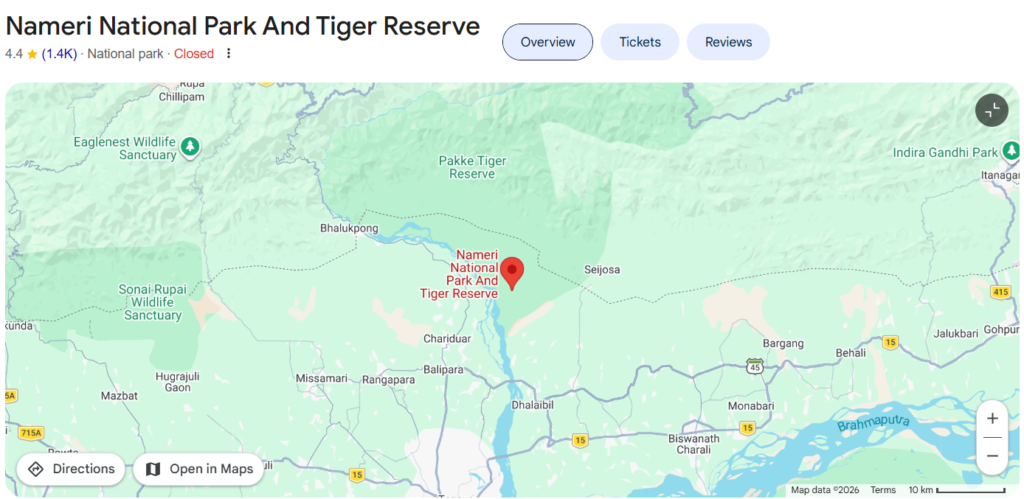
- Location: Northern Sonitpur district, Assam; ~35 km from Tezpur and ~9 km from Chariduar.
- Transboundary Landscape: Adjoins the Pakke Tiger Reserve, forming a contiguous forest tract of over 1,000 sq km.
- Tiger Reserve Status: Declared a Tiger Reserve in 2000 (Assam’s second after Manas Tiger Reserve).
- Constituent Areas: Carved out of Naduar RF, Balipara RF, and Sonai Rupai Wildlife Sanctuary.
- Core Area: Nameri National Park (200 sqkm).
- Satellite Core: Sonai Rupai Wildlife Sanctuary (120 sqkm).
- Buffer Area: Eastern & Western Buffers (144 sqkm).
- Elephant Conservation: Key core component of the Sonitpur Elephant Reserve.
Hydrology & River Systems
- Jia Bhoroli River (Kameng River): The primary hydrological lifeline of the park. It originates in the Arunachal Himalayas, cuts southwards to bifurcate/border the national park from northwest to southeast and was historically celebrated for Golden Mahseer angling (officially banned since 2011).
- Bor Dikorai River: A major tributary that marks the southern boundary of the reserve, running from northeast to southwest.
- Other Mountain Tributaries: The basin is fed by several transboundary streams originating in Arunachal Pradesh, including the Diji, Doigurung, Dikorai, Dinai, Nameri, Khari, and Upper Dikiri rivers.
Legal Status Timeline of Nameri National Park
- 1978 (Reserve Forest)
- 1985 (Wildlife Sanctuary, 137 km²)
- 1998 (National Park, 200 km²)
- 2000 (Tiger Reserve)
Forest Typing & Botany of Nameri National Park
- Vegetation Matrix: Ranges from dynamic riverine grasslands and Assam Valley floodplains to tropical moist deciduous and semi-evergreen foothill forests.
- Flora Richness: Harbors over 600 plant species, including valuable medicinal trees and hardwood timber such as Mesua ferrea (Nahar), Shoreaassamica, Terminalia myriocarpa, Chukrasiatabularis, Gmelina arborea, Michelia champaca, Agarwood, and Rudraksha.
- Orchidaceae Profile: Noted for its diverse wild orchid populations, specifically the Dendrobium, Cymbidium, and Cypripedioideae (Lady’s Slipper) genera.
Faunal Diversity & Behavioural Ecology
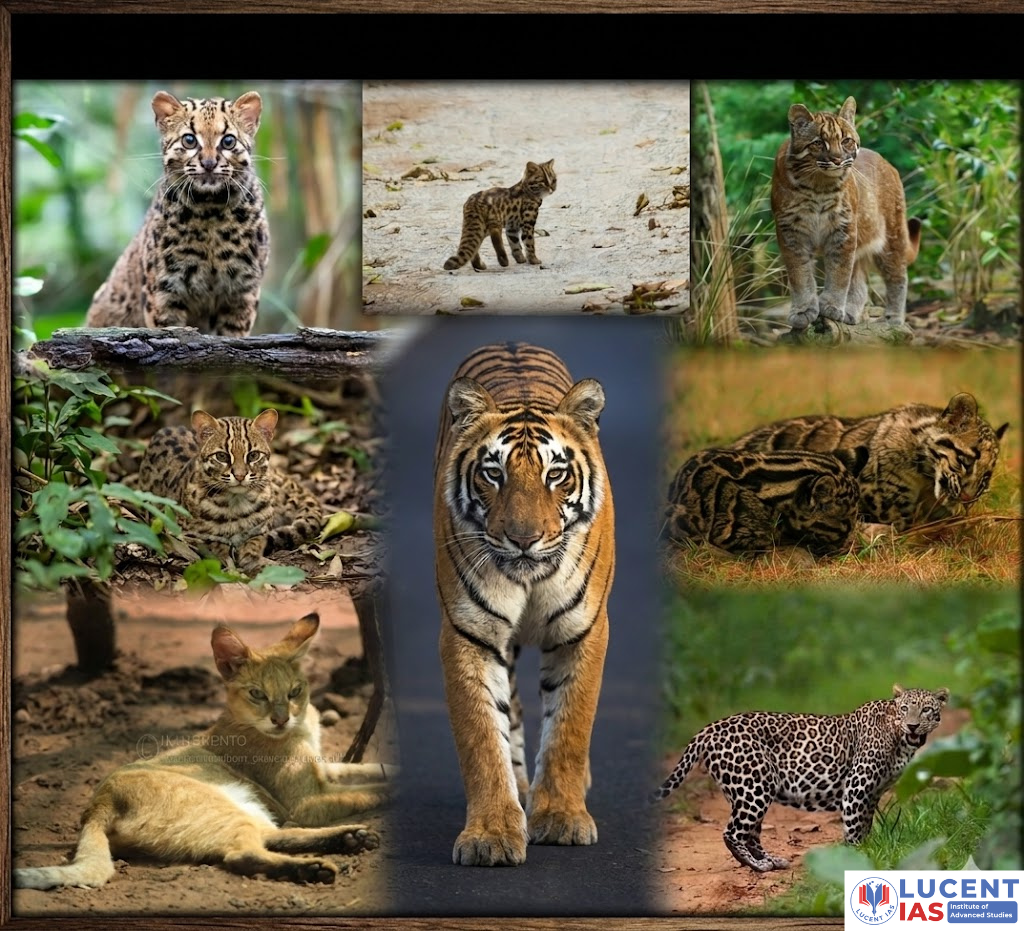
- Carnivore Hotspot: Hosts 7 wild cat species- Tiger, Leopard, Clouded Leopard, Golden Cat, Marbled Cat, Leopard Cat, and Jungle Cat; also supports Dhole and Sloth Bear.
- Tiger Dynamics: Low tiger density (1.3-1.5 tigers/100 km²); serves as an important tiger corridor with Kaziranga.
- Activity Pattern: Tigers are predominantly nocturnal, while leopards are cathemeral (active day and night).
- Major Ungulates: Gaur, Sambar, Barking Deer, Hog Deer, and Wild Boar; Sambar shows the highest prey occupancy.
- Herpetofauna: Includes Assam Roofed Turtle, Keeled Box Turtle, Southeast Asian Leaf Turtle, Myanmarese Python, and King Cobra.
Nameri as an Ornithological Hub
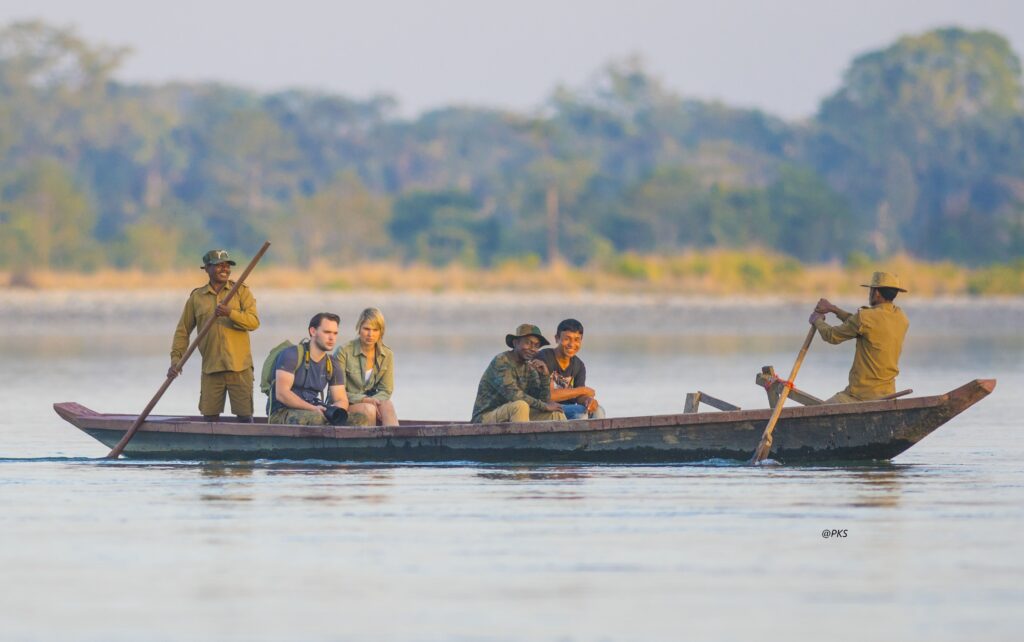
- Avian Diversity: Features over 384 documented bird species; recognized as an Important Bird Area (IBA).
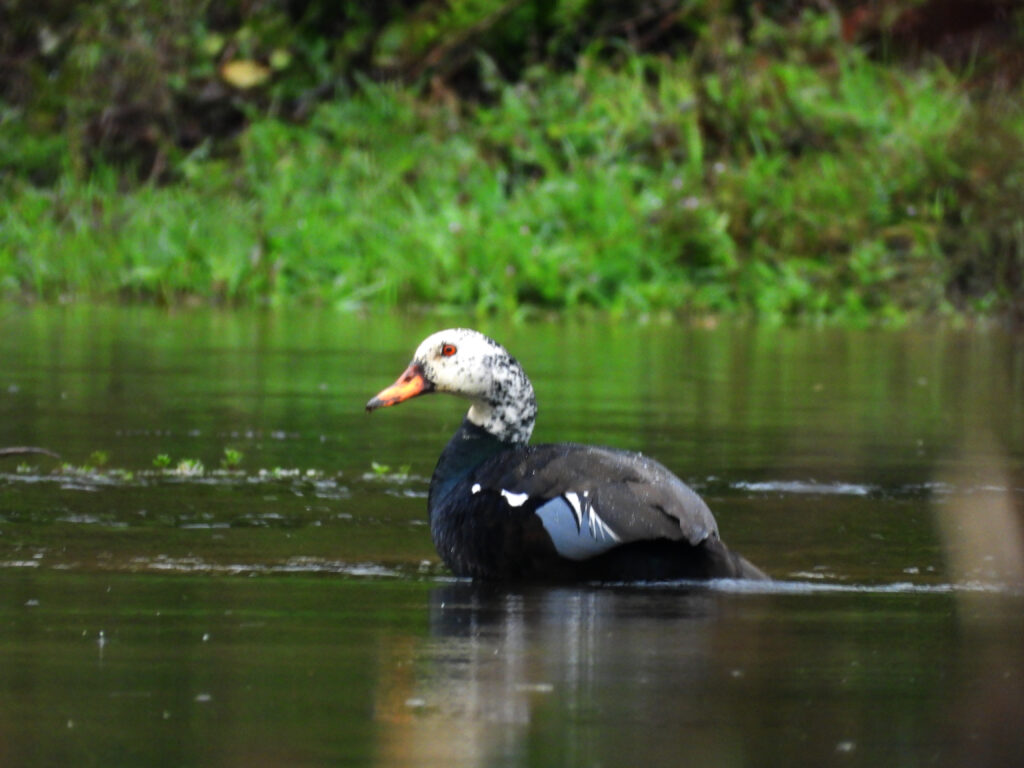
- Flagship Avians: A crucial breeding refuge for the Endangered White-winged Wood Duck (Assam’s State Bird).
- Hornbill Wealth: Hosts four distinct species: Great Pied Hornbill, Wreathed Hornbill, Rufous-necked Hornbill, and the Lesser Pied Hornbill.
- Specialized Riverine Birds: Serves as a vital habitat for the Ibisbill, Pallas’s Fish Eagle, Grey-headed Fish Eagle, Lesser Fish Eagle, and White-ramped and Long-billed Vultures.
Ecological Threats & Challenges
- Grassland Loss: Nearly 50% decline in riverine grasslands due to woodland encroachment and riverbank erosion, threatening Hog Deer populations.
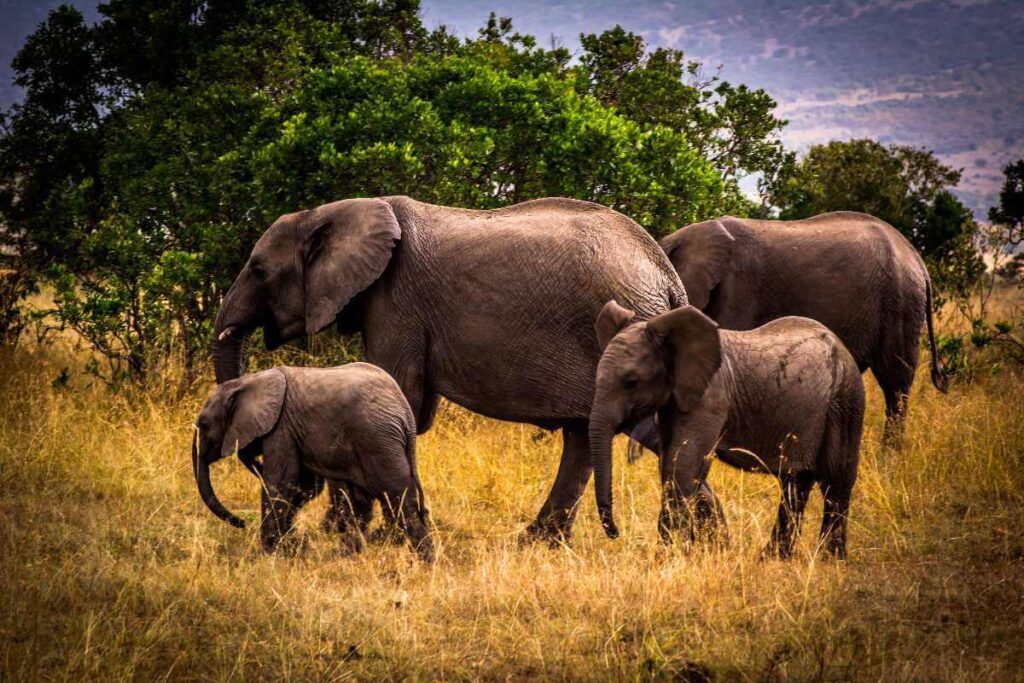
- Human–Wildlife Conflict: Frequent crop raiding and village incursions by elephants, aggravated by forest fragmentation and reduced canopy cover.
- Anthropogenic Pressure: Encroachment, illegal logging, and large-scale cattle grazing (>3,000 cattle) in peripheral areas.
About Lucent IAS
Lucent IAS is a premier coaching institute in Guwahati, dedicated to empowering APSC aspirants with a result-oriented approach. Recognized as a top destination for APSC Coaching, we offer comprehensive guidance ranging from Foundation Courses and Advanced Mains preparation to our signature Assam-Centric study modules. With expert faculty, small batch sizes for personalized mentoring, and the acclaimed Saadhana Test Series, Lucent IAS is committed to helping you crack the Civil Services Examination.
Publications From LUCENT IAS
- “The Assam Odyssey: The Complete Assam Centric Resource useful for APSC CCE and various other Departmental Examinations. Read More
- InExam PYQ Explained.Read More
- Mains Tattva: The Craft of Answer Writing (GS Paper PYQs). Read More
- Maanchitra – An Illustrative Colour-Coded Informative Map of Assam. Read More
- প্ৰাৰম্ভ (Prarambha). Read More
- অসম ওডিচী – The Assam Odyssey (Assamese Edition). Read More
Start your journey to success today. Visit us at lucentias.com or call +91-6913007777 for more details.