

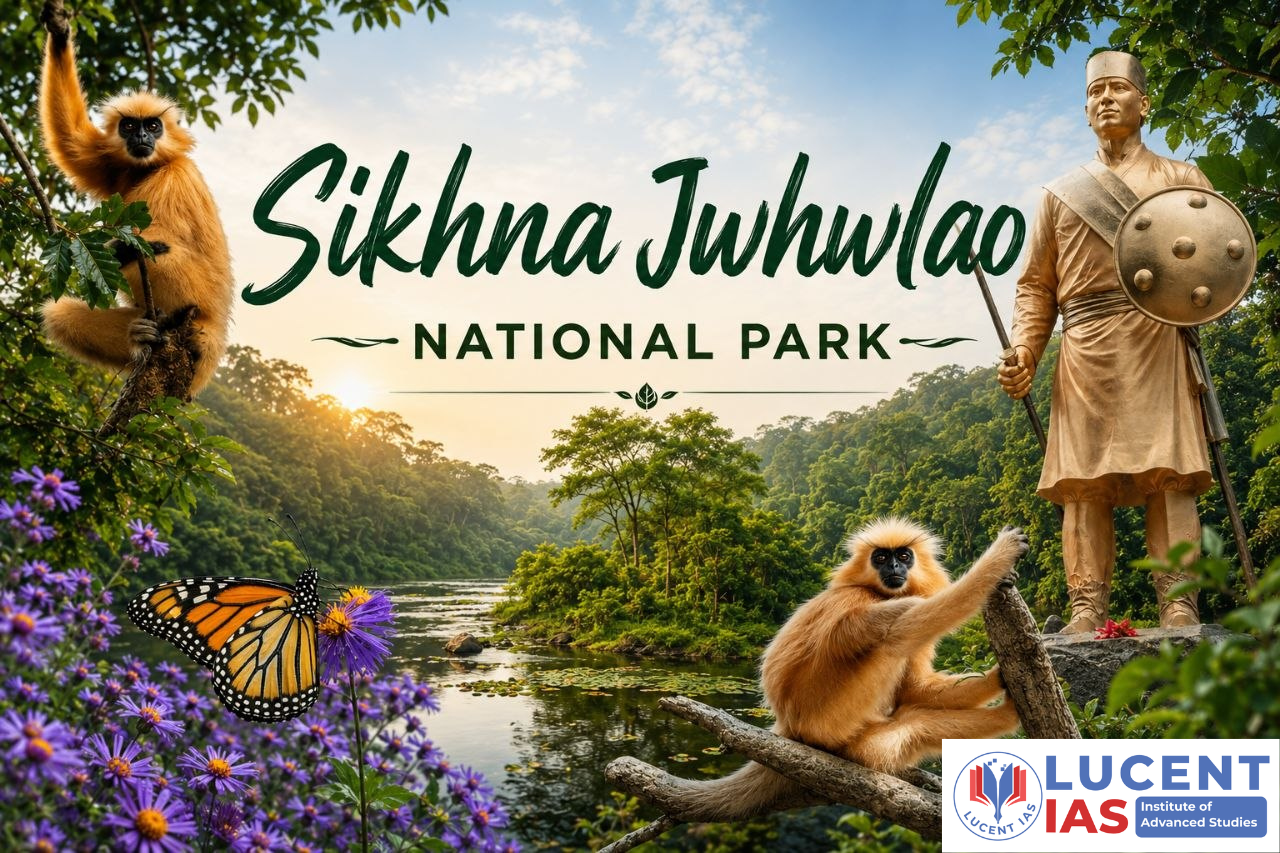
Discover SIKHNA JWHWLAO NATIONAL PARK, officially notified as Assam’s 8th National Park. Learn about its geography, rich wildlife, and Bodo historical heritage for APSC ( Prelims & Mains ).
Introduction
Sikhna Jwhwlao National Park represents a crucial addition to India’s protected area network. It safeguards key ecological corridors along the Indo-Bhutan international border and anchors community-backed conservation frameworks in Western Assam.
Administrative & Spatial Profile
- Chronological Status: Officially notified as Assam’s 8th National Park and the 3rd National Park within the Bodoland Territorial Region (BTR), following Manas and Raimona.
Legal Timeline:
- Approved by the Assam Cabinet on 16 February 2025.
- Formally notified by the Governor of Assam on 5 March 2025 under the provisions of the Wildlife (Protection) Act, 1972.
Location & Jurisdictions:
- Districts: Spans across Kokrajhar and Chirang districts.
- Sub-divisions: Covers Kokrajhar and Kajalgaon sub-divisions.
- Forest Divisions: Encompasses jurisdictions of both the Haltugaon Division and Chirang Division.
- Spatial Area: Covers a total land area of 316.29 sq. km.
Physical & Hydrological Boundaries
- North: Bordered by Bhutan, extending from the Saralbhanga River towards Geylekphu via the Bhur River.
- East: Runs south along the Aie Block of Manas Reserve Forest, parallel to the Bhur River.
- South: Follows the Ride-9 boundary and reconnects with the Saralbhanga River.
- West: Defined by the Saralbhanga River and the eastern edge of Raimona National Park, including Ultapani and Labanyapur Forest Villages.
Transboundary Landscape & Ecological Corridors
- Part of Greater Manas: An important component of the Manas Biosphere Reserve.
- Ecological Corridor: Connects protected areas across the India-Bhutan border, enabling wildlife movement.
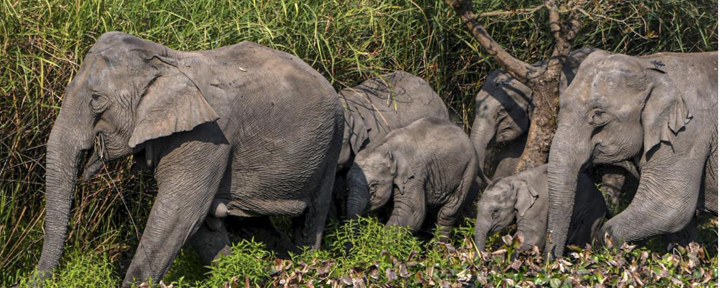
- Elephant Landscape: Forms part of the Chirang-Ripu Elephant Reserve, supporting seasonal movement of elephants and other large mammals between Assam and Bhutan.
Habitat & Floral Diversity
- 12 Forest Types: Supports diverse habitats due to micro-climatic variations.
Major Forests:
- Sub-Himalayan Semi-Evergreen Forests
- Moist Sal Forests
- Moist Mixed Deciduous Forests
- Savannah Grasslands & Riverine Forests
- Riparian and Khair-Sissoo Forests
Water Sources
- Perennial water bodies, including Mashbhandar Lake, provide year-round water for wildlife.
Faunal Diversity
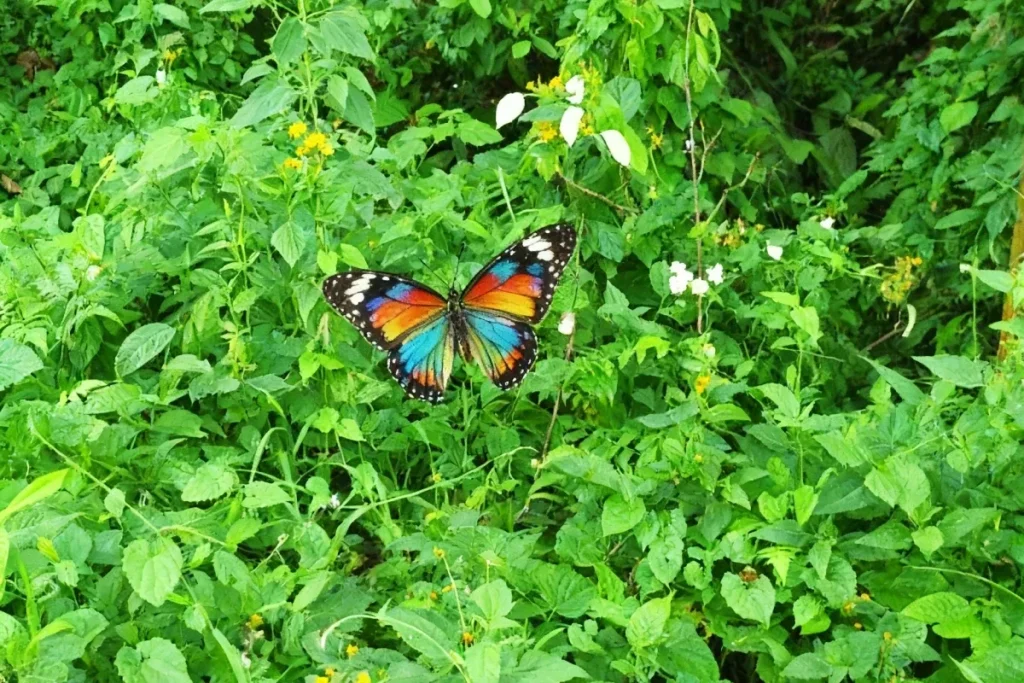
- Butterfly Hotspot: Home to 460+ butterfly species, especially in the Ultapani forest block.
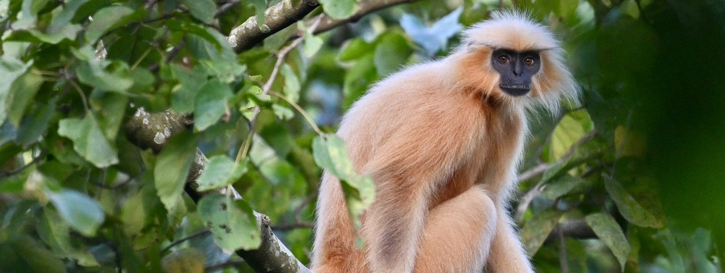
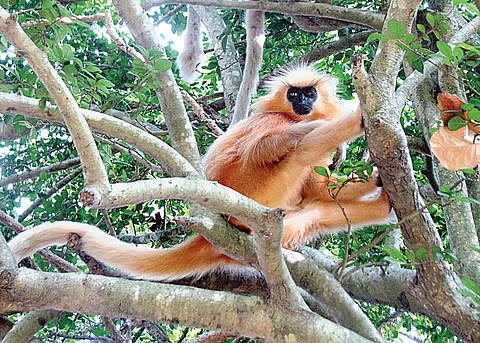
- Golden Langur Habitat: Supports important populations of the Endangered Golden Langur.
- Flagship Mammals: Habitat for the Royal Bengal Tiger, Asian Elephant, and One-horned Rhinoceros.
- Other Wildlife: Includes Indian Leopard, Gaur (Bison), Hog Deer, Monitor Lizard, and endangered land tortoises.

Ethno-Historical Heritage & Cultural Fabric of Sikhna Jwlwhao NP
- Etymology: Named after Sikhna Jwhwlao(JouliaDewan), a Bodo warrior who led resistance against the British during the Duar War (1864-66).
- Sacred Geography: His historic capital, Sikhnajhar (Chiknajhar), lies within the Ultapani Reserve.
- Living Heritage: The site is revered by the Bodo community and hosts annual Bathou Puja and Kherai Puja.
Duar War (1864-65)
- Fought between Bhutan and the British.
- Caused by Bhutanese raids, abduction of people, failed diplomacy, and British interest in the Duars.
- Ended with the Treaty of Sinchula(1865).
- Bhutan ceded the Duars to the British.
- In 1866, the Assam Duars became the Eastern Duars.
Sikhna Jwhwlao
- ChikhnaJwhwlao was a local Mech/Bodo chief who ruled in the Duars region.
- His capital was Chiknajhar(Sikhnajhar), located in the forests of present-day Kokrajhar district.
- The ruins of Chiknajhar still exist and are considered an important historical site.
- The site is believed to have been one of the frontier fortifications of the region.
- In Bodo tradition, Sikhna Jwhwlao (Joulia Dewan) is remembered as a heroic leader who resisted British expansion during the Duar War period.
- The historic capital at Chiknajhar is preserved as a sacred heritage site by the Bodo community and remains associated with traditional religious observances.
About Lucent IAS
Lucent IAS is a premier coaching institute in Guwahati, dedicated to empowering APSC aspirants with a result-oriented approach. Recognized as a top destination for APSC Coaching, we offer comprehensive guidance ranging from Foundation Courses and Advanced Mains preparation to our signature Assam-Centric study modules. With expert faculty, small batch sizes for personalized mentoring, and the acclaimed Saadhana Test Series, Lucent IAS is committed to helping you crack the Civil Services Examination.
Publications From LUCENT IAS
- “The Assam Odyssey: The Complete Assam Centric Resource useful for APSC CCE and various other Departmental Examinations. Read More
- InExam PYQ Explained.Read More
- Mains Tattva: The Craft of Answer Writing (GS Paper PYQs). Read More
- Maanchitra – An Illustrative Colour-Coded Informative Map of Assam. Read More
- প্ৰাৰম্ভ (Prarambha). Read More
- অসম ওডিচী – The Assam Odyssey (Assamese Edition). Read More
Start your journey to success today. Visit us at lucentias.com or call +91-6913007777 for more details.